Monday, September 21, 2015

Mandana - one of the folk art forms of Western India


MANDANA: A Gujarati Folk Art Form


[Pic: Mandana on the walls of a rural home]


[Pic: Mandana on the walls of White Sanctum Art Gallery]


Like many other folk art forms, this form, too, has been woven inextricably into our social and cultural fabric. Mandana is expressed through different forms and symbols around religious and auspicious social occasion. These images are beautifully delineated through triangles, pentagons, octagons, squares, round or circles, embellished with floral motif and bird and animal form.

White chalk (khadi), red or ochre chalk (geru) and indigo powder are melded for the creation of Mandana. Each of these ingredients is soaked in water separately in different ways.


[Fig: Mandana of Brahma Vishnu Mahesh]


A piece of cloth is soaked in these colours separately, wrapped around the small finger and than different forms are executed on the cow dung plastered mud walls facing the front yard of the house.


[Fig: Mandana on floor]


What makes the Mandana art form particularly interesting is that each original image is beautifully expressed through instinctly created symbols and forms. There is no limit to elaborated and executed with a high degree of imagination and ingenuity.


[Fig: Mandana of Yog Shakti]

This folk art form reflects the quality of the life of simple folks in its entirety with great spontaneity and directness that, again,affords us a valuable insight into their world.


The rendering of this art form can be seen on the wall and court of houses and raised platforms (chabutra) on which food grains are strewn for birds to feed on.

Mandana is considered to be symbols of joy and prosperity. It is supposed to bring joy in people’s lives. Although this ancient art form is ingrained in tradition, it is seen amazingly integrated in mainstream currents of modern art.

This folk art form has evolved to become the core of traditional art and will remain so forever. It will flourish from generation to generation as a part if social customs and become one with living art.

- Atul Padia

Folk and tribal art of India


"Folk and tribal art in India takes on different manifestations through varied media such as pottery, painting, metalwork,[60] paper-art, weaving and designing of objects such as jewelry and toys.These are not just aesthetic objects but in fact have an important significance in people's lives and are tied to their beliefs and rituals. The objects can range from sculpture, masks (used in rituals and ceremonies), paintings, textiles, baskets, kitchen objects, arms and weapons, and the human body itself(Tattoos and piercings). There is a deep symbolic meaning that is attached to not only the objects themselves but also the materials and techniques used to produce them.

Often puranic gods and legends are transformed into contemporary forms and familiar images. Fairs, festivals, local heroes (mostly warriors) and local deities play a vital role in these arts. Example : Nakashi art from Telangana or Cherial Scroll Painting.

Folk art also includes the visual expressions of the wandering nomads. This is the art of people who are exposed to changing landscapes as they travel over the valleys and highlands of India. They carry with them the experiences and memories of different spaces and their art consists of the transient and dynamic pattern of life. The rural, tribal and arts of the nomads constitute the matrix of folk expression. Examples of folk artists are Warli and Gond."


[Pic taken from http://www.thehindu.com/features/friday-review/art/tales-of-dots-and-dashes/article4952472.ece for representation purpose only]


[Pic: Mandana Painting of Ganesha by Atul Padia]


"While most tribes and traditional folk artist communities are assimilated into the familiar kind of civilised life, they still continue to practice their art. Unfortunately though, market and economic forces have ensured that the numbers of these artists are dwindling.[61][62] A lot of effort is being made by various NGOs and the Government of India to preserve and protect these arts and to promote them. Several scholars in India and across the world have studied these arts and some valuable scholarship is available on them.

The folk spirit has a tremendous role to play in the development of art and in the overall consciousness of indigenous cultures."


[From https://en.wikipedia.org/wiki/Indian_art on Folk and tribal art of India]

Thursday, August 27, 2015

108 Ganeshas at White Sanctum

108 Vinayaka 108 Kalanayaka

Pic: A section of 108 Ganeshas in display


Pic: A section of 108 Ganeshas in display-1

Pic: A section of 108 Ganeshas in display-2

Pic: A section of 108 Ganeshas in display-3


Pic: A section of 108 Ganeshas in display -4


Pic: A section of 108 Ganeshas in display -5


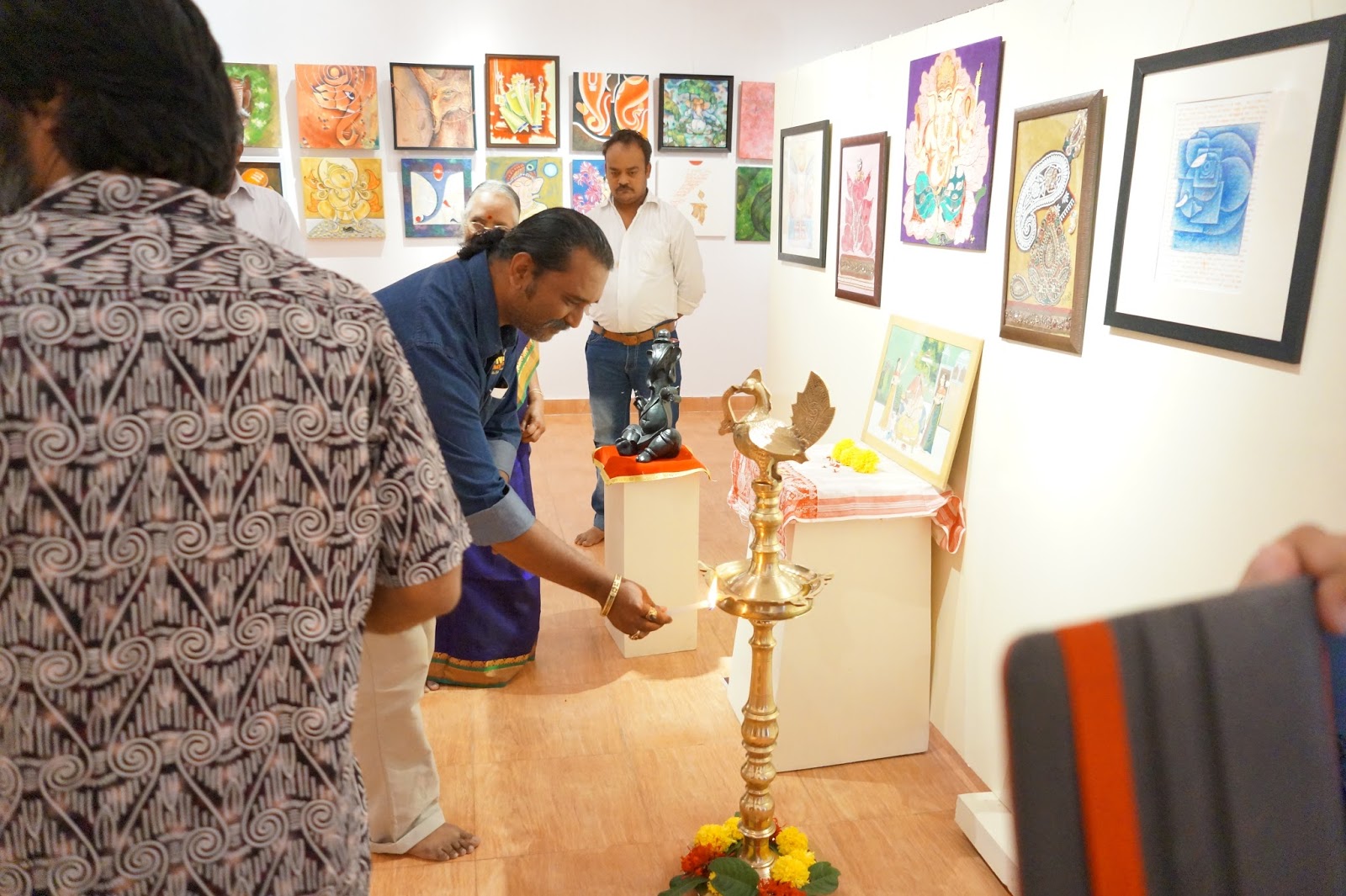
A travelling exhibition hosted by White Sanctum Art Gallery at it's premises with the works of 108 artists. It was an emotional privilege for the gallery to host a show containing 108 Ganeshas, and by 108 artists from India and abroad. It is a travelling art group exhibition, conducted at different state’s (Karnataka, Maharashtra, Madhya Pradesh, Delhi, Rajasthan and Gujarat) 8 places like Bangalore, Nagpur, Ujjain, Delhi, Bhilwara, Ahmedabad, Vadodara and last at Saputara with grand workshop.


The exhibition was inaugurated by Umesh Udupi Vasudeva Rao


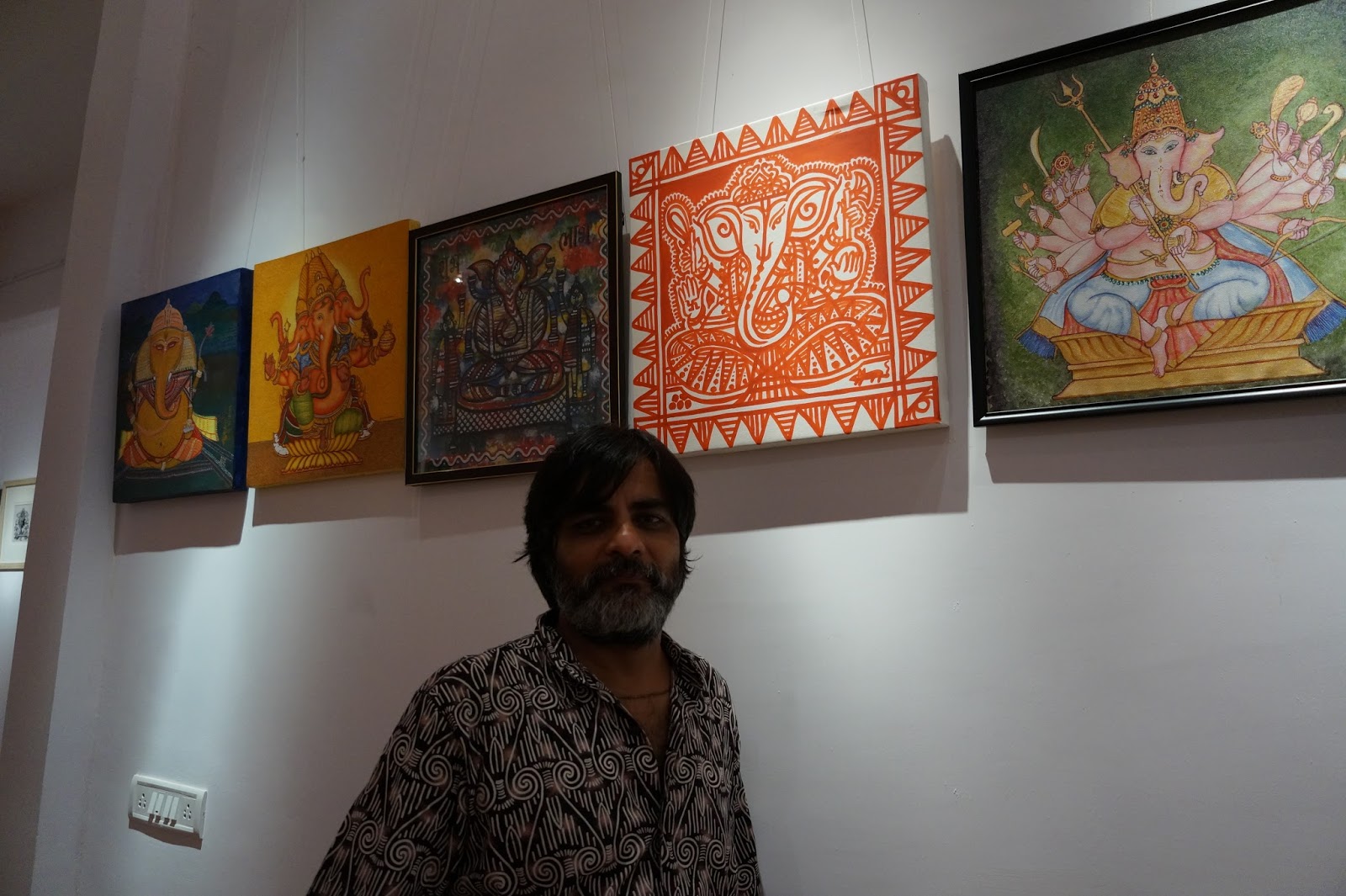
Pic: Atul Padia with his painting

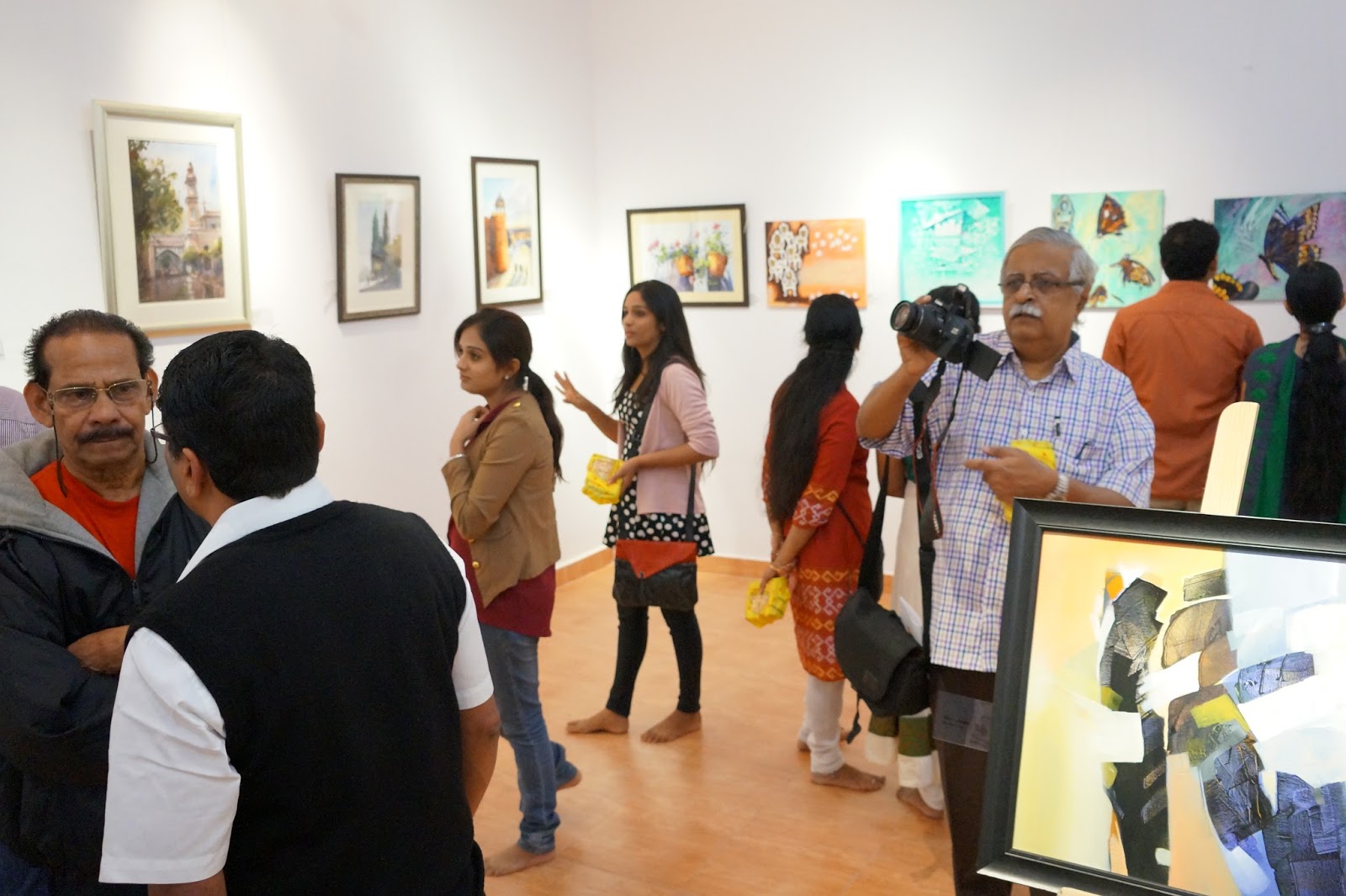
Pic: During the exhibition

Pic: During the exhibition


Pic: During the exhibition


Pic: During the exhibition


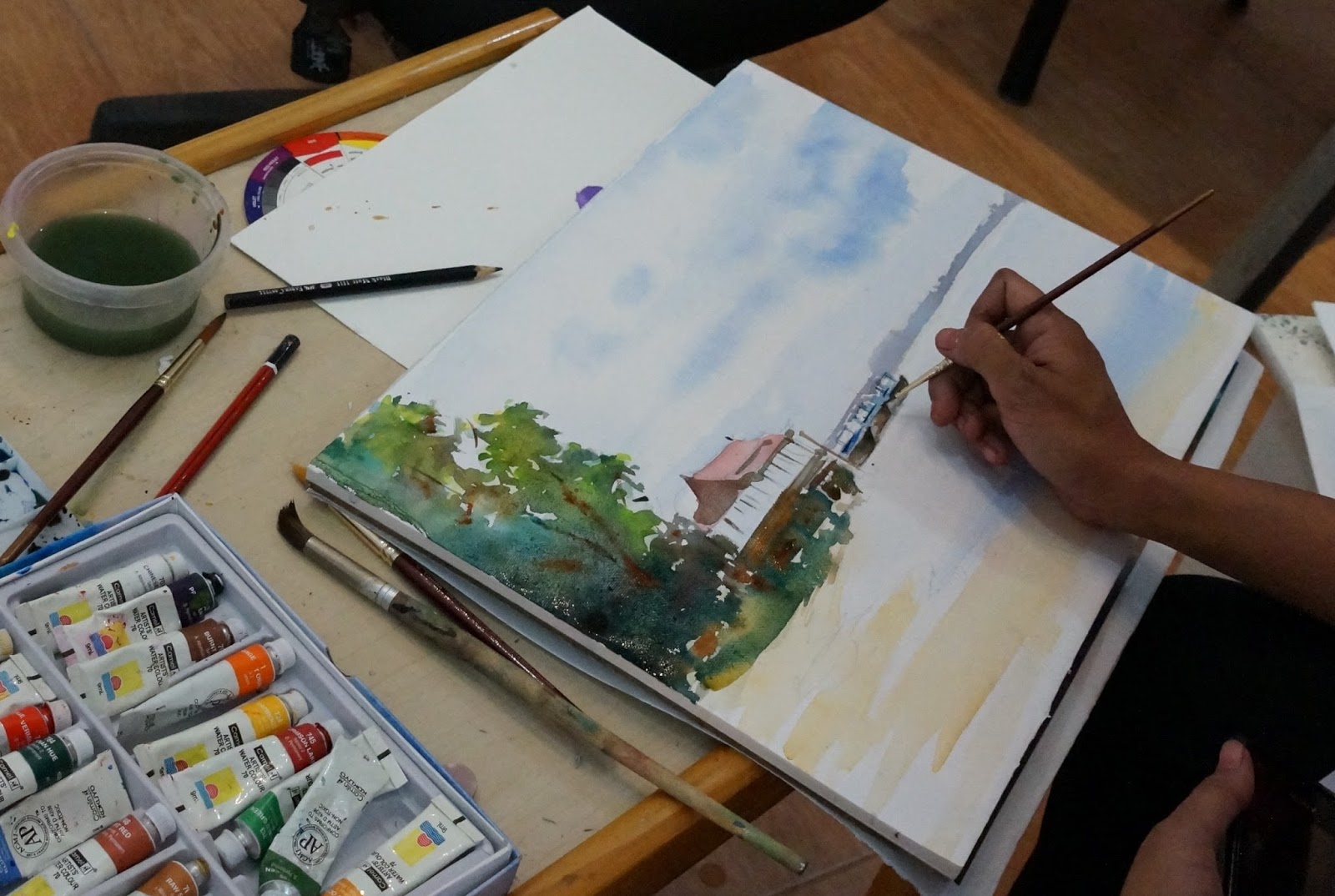
Watercolor Workshops conducted at White Sanctum


Colors of India-2


The inaugural exhibition of the gallery is titled “Colors of India-2”. It s a part of  a series of exhibitions curated by the artist Bindu P V relating to national integration through arts. “Colors of India-2” is an effort by her to bring together artists from different parts of India depicting various facets of modern India through the art exhibition. The artists participating in this exhibition are Sadhu Aliyur, Bindu P V, Varghese Kalathil, Roshin Thankachan, Kanthraj N, Veeranna Karadi, M S Lingaraju, Madhu Kumar, Sunitha Ramachandra, Umesh C J, Manjiree Manolkar, Atul Padia, Avani Shah, Mahendra Mithapara, Nirupam Konwar and Sumitha Sundaram.
The internationally famous artists Sadhu Aliyur, Kanthraj N, Madhu Kumar and Nirupam Konwar bring out the world of an aquarelle charm in the new gallery to be inaugurated. Works of artists from Vadodara like Atul Padia, Avani Shah, Mahendra Mithapara depict the beauty of Sahyadri and Gujarat. The painting Introspection by Bindu P V is her depiction of the Bhuj earthquake of Gujarat, which she experienced during her stay in Jamnagar. Manjree Manolkar is a bureaucrat and also is an artist who has done her Master in Fine Arts (MFA) Studio Arts, Maine College of Art in USA. Using the chair as a symbol of power and various different imagery from her everyday life and cultural background, she tries to explore something as abstract as power through her art. M S Lingaraju and Umesh C J paints beautiful landscapes in abstracts. The academician and artist Varghese Kalathil has been part of many state level exhibitions by Kerala Lalithakala Akademi since 1993 and has done illustrations and cover designs for more than 200 books. Through his 8 paintings he depicts the thoughtful life through the eyes of an artist. The Bangalorean artist Sunitha Ramachandra uses the elements of earth to bring to life beautiful organic artworks. In this exhibition photograph of her such site specific work is displayed. Roshin Thankachan’s art attempts to deal with the harmonic co-existance of nature and mankind but also reveals a sturdy take on the contemporary chaos in our society.  Sumitha Sundaram, a Chennai artist shows keen interest in realism and likes to emphasize on viewer’s emotions. Workshops as part of the exhibition will also conducted by renowned artists at the gallery premises. 16 Artist from 6 different states putting together their works reflecting their take on India is the theme of the exhibition colors of India. The exhibition is from 18th January to 15th February 2015. Workshops of watercolor by International artists will be conducted in the gallery during February. Intrested people can contact the gallery.


[Pic: Paintings of Varghese Kalathil in display]
 [Pic: Paintings of Varghese Kalathil and Sadhu Aliyur in display]
[Pic: Paintings of Atul Padia, Sunitha R, Bindu P V in display]

[Pic: Paintings of Roshin Thankachan, Veeranna Karadi, Mahendra Mitapara and Bindu P V, in display]

[Pic: Paintings of Madhu Kumar, Nirupam Konwar, Manjiree Manolkar, Kanthraj N, M S Lingaraju in display]


The gallery is functuctional between 11 Am. – 8 Pm. at WHITE SANCTUM Art Gallery, 2nd Floor, #9, “Sreeragam”, Krishna Reddy Layout, Near Wasa Layout, 5th Main, Dodda Nekkundi, Bangalore 560037. Ph: 08065687209. whitesanctum@gmail.com

Monday, February 23, 2015

Where?

Where is it located?
Address: 2nd floor, #9, "Shree ragam",
Krishna Reddy Layout, Near Wasa Layout,
Dodda Nekkundi, Bangalore, Pin: 560037
India.

Ph: +9180 65687209
email: whitesanctum@gmail.com

Location Map:
Open the google map and search for White Sanctum or better click on this link

https://www.google.co.in/maps/place/White+Sanctum


Writeups about White Sanctum in [2014 -2015 Feb]


Henry Grahn Hermunen

Experts from a short interview with Henry Grahn Hermunen from Finland-Sweden   Henry Grahn Hermunen is a contemporary artist living in F...